
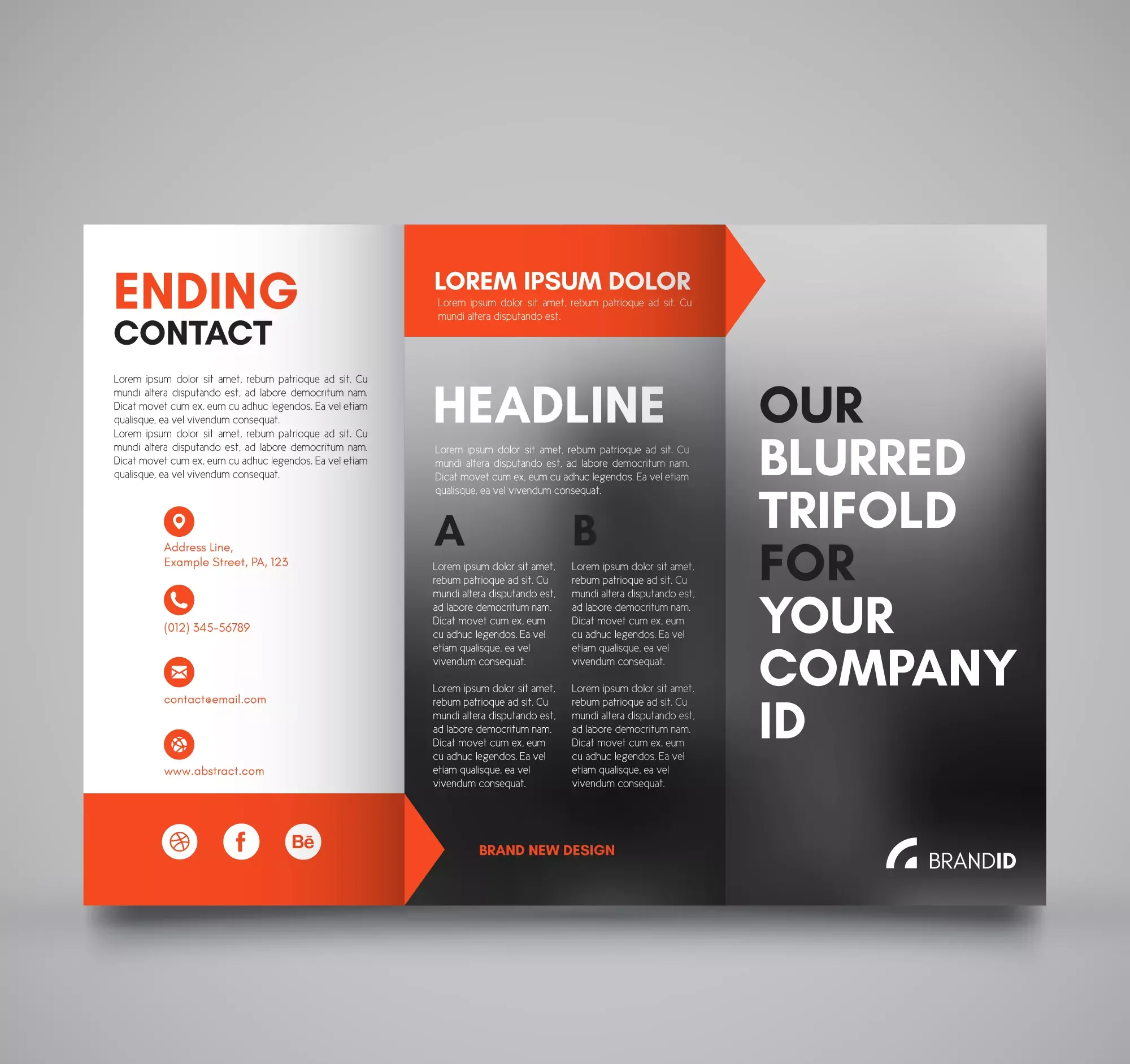
Think you know everything there is to know about flyers? Seems like there’s not too much to understand—they’re the papers stapled up around your neighborhood with little tear-off phone number strips, right? A brochure is a flyer that’s folded up, pretty self-explanatory. Not quite.
So, what’s the difference between a flyer and a brochure? Their main difference is the fold, but that crease is just the beginning of their differences. They are used for totally different things. A brochure can accomplish a lot of things that a flyer simply can’t, and certain jobs are best suited for a flyer and a flyer alone. As for the sizing, there are lots of standard brochure dimensions, but there are only a couple of standard flyer sizes.
Whether you need a flyer, a brochure, or both depends on your marketing goal, and that’s not where your print choices end. Your marketing goals and needs also drive what size flyer or brochure you need and what they need to be made of.
Why would I need a flyer?
Flyers are quick. When you have little bursts of information you need to get out there, a flyer’s the way to do it. Use a flyer when you need to:
- Get the word out about a sale
- Let everybody know you’re open for business
- Get the conversation between you and your customers started with a fact sheet about your product
- Advertise who you are, what you do, and what you’re promoting right now
- Announce an upcoming event
- Get coupons into your customers’ hands
- standard size flyer with a classic yet modern design
Flyers are low-tech, so they’re perfect for situations where low-tech is just fine or even preferable, like advertising a yard sale or inviting the whole town to your café’s grand opening. We’ve got the perfect guide to help you create a flyer for your business.
Standard flyer sizes
A standard flyer is usually the size of a piece of computer paper. That’s very similar to the universal A4 (21 x 29.7 cm) size, used in many countries. But smaller formats are also popular when it comes to flyers. The most common flyer sizes include:
- Letter size: 22 x 28 cm or A4: 21 x 29.7 cm
- A5: 15 x 21 cm
- A6: 10.5 x 14.8 cm
- DL (dimension lengthwise): 9.9 x 21 cm or one third of A4
Graphic comparing standard flyer sizes
Which size you should pick for your flyer design depends largely on the content of your flyer, as well as where and how you want to distribute it. If you’re planning to tape your flyers to walls or want to convey lots of information, you should go for a larger size, such as letter size or A4. If you’re planning to post your flyers, you need to pick a size that fits into a standard envelope, such as A6 or DL. At Waves Branding, we offer a diverse array of flyer templates designed to assist you in various situations and purposes.
The cost per flyer with the printer of your choice will also affect what flyer size you choose, as larger and non-standard sizes will likely be more expensive.
Best flyer materials
Since they’re meant to have short lives, they’re usually printed on lower-quality, inexpensive paper. That doesn’t mean you can’t print flyers on higher quality paper or that there’s never a reason to—some flyers are meant to last a long time, like a list of customer service procedures to be posted in a call centre. A flyer designed for this job needs to be on durable paper.
Red, black, and white double-sided flyer for a safety vest company
Flyers are at the top of the funnel. Grab people’s attention, and let them decide if they want to keep talking to you.
Want to learn more about flyer design? Check out this article on how to design a flyer and let yourself be inspired by our list of flyer design ideas crafted to set you apart.
When do I need a brochure?
We’ve curated a comprehensive resource covering everything you need to know about brochures. In essence, when you have more information to convey than can fit on a flyer, a brochure becomes the ideal solution. That’s the main difference between a flyer and a brochure. But that’s not the only difference between them. There’s another equally straightforward difference between a flyer and a brochure to keep in mind: a brochure has folds, and a flyer doesn’t. Sure, you can fold a flyer, but if the fold is part of its design, it’s not a flyer…it’s a brochure.
Gate-fold brochure for a real estate brand
Different folds create different feels, like this gate fold that mimics opening a door. Source: Brochure design by Waves Branding
The fold is key. There are many different ways to fold a brochure, and the best fold choice depends on the brochure’s size and design. Commonly used brochure fold types include:
- Trifold
- Half-fold
- Gate fold
- Double gate fold
- Parallel fold
- Z-fold
- Accordion fold
- Roll fold
- and more

Standard brochure sizes
How big is a standard brochure? There are lots of standard brochure sizes. The most common sizes for brochures (before folding or when opened) include:
- Letter size: 21.59 x 27.94 cm
- DIN A4: 21.0 x 29.7 cm
- Legal size: 21.6 x 35.6 cm
- Memo size: 14 x 21.6 cm
- Tabloid size: 28 x 43.2 cm
- 22.9 x 30.5 cm
- 28 x 64.8 cm
The most common styles of brochures are letter-size paper with a half-fold and tri-fold. Each side of a tri-fold brochure is printed on standard letter-size paper (21.59 x 27.94 cm), and after folding the paper three times, the brochure will measure 21.59 x 9.4 cm. If you print a half-fold brochure on the same standard letter-size paper, each side will measure 21.59 x 14 cm after folding.
Feel free to explore Waves Branding brochure templates to experiment with various sizes and check out our guide to help you create a brochure that stands out.
When to pick a brochure over a flyer
So, when would you want to print a brochure instead of a flyer? Basically, any time you have more information to give out than you can fit on a flyer. This could be when you:
- Follow up connections you’ve already made
- Want to educate an engaged audience about a product or promotion
- Need to have reference materials on hand
- Tan brochure with images that look like notebook pages full of info on raising puppies
A brochure delivers way more information than a flyer can.
A brochure and a flyer can be two points in the same funnel. After piquing interest, say at a trade show you are handing out flyers with a list of everything that makes your product amazing, you’d use a brochure to give to people who want more details. With the additional information they get from the brochure, they’ll either buy the product, book the consultation, or do the thing you want them to do.
Learn how to design a brochure in this step-by-step guide.
What about pamphlets? And booklets?
Flyers and brochures are just two of the many, many printed formats out there. While a flyer is universally defined, what constitutes a brochure versus a pamphlet or a booklet isn’t as generally recognized.
A pamphlet and a brochure are the same thing. Some define a pamphlet as a short brochure, but it’s just as common for the terms to be used interchangeably.
Mockups for a dark blue booklet
Booklets and magazines are another print avenue to explore.
A booklet is just a little book. And just like a big book, a booklet is bound, rather than folded. Typically, they have higher-quality paper than brochures and more durable binding. Generally, important, evergreen information is reserved for booklets and the higher printing cost they command.

Design for the size you need
From the beginning, you should think about how you’re going to distribute your flyers or brochures because this will factor into your budget. If you plan on sending them out in letter size or big manilla envelopes, you have your answer to “what size should my flyer/brochure be?” You also know you’ll have to budget for the envelopes.
Ask yourself if you’ll be:
- Handing the flyers or brochures at events
- Slipping them under doors
- Stapling them to noticeboards or telegraph poles
- Taping them onto a wall
- Posting them out
- Including them in larger packets
- Sticking them under parked cars’ windscreen wipers
It’s hard to know whether a design works if you don’t see what the finished product will look like. That’s why you need mockups. Ideally, you’ll be able to look at fully fleshed-out mockups that show your design in action but if this isn’t the case, even a simple mockup showing how it’ll fit onto the paper can work. Read more about mocking up your designs with this guide.
Looking at your mockup can show you where you need to tweak your design. A font that’s legible on a large flyer might be difficult to read on a small pamphlet. A color palette that’s fine at a short distance might have too low a contrast to be seen from further away, making it a poor choice for a flyer that’s going on a noticeboard. Your message also determines the right design choices for your flyer or brochure; a flyer for a going-out-of-business sale needs brighter, more urgent colors than an investment brochure.