
What is a flyer used for?
Flyers are a popular marketing tool, thanks to their versatility and wide range of use cases. Whether promoting a sale or spreading the word about an event, flyers can effectively deliver your message.
Small businesses commonly use flyers to:
- Announce special promotions or discounts: Flyers are ideal for grabbing attention with limited-time offers or exclusive deals.
- Distribute special offer vouchers: Attach vouchers to your flyers, providing extra incentive for customers to visit your physical or online shop.
- Advertise events: Event flyers can generate buzz and draw a crowd to an event, launch party or grand opening.
- Raise awareness: Inform the public about your community initiatives and involvement or charity events to boost participation and brand perception.
- Showcase new products or services: Highlight new features and benefits of your latest offerings and product lines to attract interest and boost sales.
- Highlight seasonal offerings: Promote seasonal or themed products and services.
- Promote loyalty schemes: Encourage customer loyalty by outlining the benefits and rewards of becoming a member or joining your loyalty scheme.
- Update customers about changes: Keep your customers in the loop about important business changes such as new hours, relocations or policy updates.
- Recruit new employees or volunteers: Spread the word about job openings or volunteer opportunities to attract the right candidates.
Benefits of flyers: Why does your business need flyers?
Here’s why businesses should incorporate flyers into their marketing strategy:
Cost-effective: Flyers are inexpensive to print, making them one of the most cost-effective ways to promote a business, event, or special offer.
Easy to produce and distribute quickly: Flyers can be designed, printed, and distributed quickly to large audiences, perfect for time-sensitive promotions.
High visibility: Flyers placed in busy targeted areas can capture the attention of potential customers.
Tangible and memorable: Physical flyers offer a tactile experience that digital ads can’t match, making them more memorable.
Support local and wide-reaching marketing campaigns: Flyers are effective for local advertising but can also be posted or handed out to reach a broader audience.
Increased brand recognition and visibility: Flyers help build brand awareness and increase brand visibility.
What makes a good flyer?
Yes, flyers offer plenty of benefits — but to get results, you need more than just ink on paper. The best flyers are clear, compelling, and made with design principles in mind. So, how can you make sure your flyer gets noticed by the people its message is intended for?
Write engaging flyer copy to capture attention and effectively communicate your message. Here are some tips:
Tailor your language: Adjust your tone and language depending on the type of flyer and its target audience. For example, a flyer for a corporate event should be professional, while a flyer for a community fair can be more casual and fun.
Use persuasive language: Use persuasive techniques like urgency (‘Limited-Time Offer’), exclusivity (‘Members Only’) or proof (‘Join Thousands of Satisfied Customers’) to encourage action.
Focus on benefits: Highlight the benefits or value your audience will gain from your product, service or event. Make it clear why they should be interested.
Adjust length based on flyer type: Tailor the length and detail of your copy to fit the specific purpose of your flyer. Informational flyers may require more detailed copy, while promotional or event flyers should be more concise.

Flyer design tips
These design tips will help create a flyer that grabs attention for all the right reasons:
The right flyer size: From compact 10.2 cm × 15.2 cm handouts to spacious 21.6 cm × 27.9 cm layouts, the flyer size will determine how much information you can include and how your flyer will be distributed. Need something to post on a community board? Go bigger. Handing out promos at an event? Smaller might be better.
A clear purpose: Every element of a flyer — headline, visuals, call to action — should support a specific marketing goal.
Scannable information: People scan flyers, so focus on the what, when, where, and how, delivered in as few words as possible. Use headlines and brief paragraphs to make your content easily scannable.
Strong visual hierarchy: Your flyer needs to guide the reader’s eye from the most important information to the least, balancing visuals, whitespace, and written copy so it’s easy to scan.
Readable on-brand fonts: Choose flyer fonts that fit your message and reflect your brand. Bold sans-serif fonts work great for headlines, while clean serif fonts keep body text readable.
A clear call to action: A well-designed flyer tells people exactly what you want them to do. Want them to visit your website? Say that. Want them to use a discount code? Make it obvious. Include one CTA and put it front and centre.
Professional-quality design and printing: A professional look builds trust and shows your audience you mean business.
How to create a flyer for your business
Now that you know what separates a good flyer from a forgettable one, it’s time to bring it to life. The process is simpler than it looks, especially when you know how to design a flyer.
Before opening up a design tool, be clear about:
The purpose of your flyer: Does it intend to drive foot traffic, promote a launch, or offer a discount?
Your flyer’s audience: Who is your flyer speaking to, and what will grab their attention?
Once clear on those, you can start working on the flyer’s content. When crafting your flyer copy, focus on clear benefits. Prioritise the most useful information that your audience needs to know to take action. Then, build a layout that supports your message.

Business flyer FAQs
What is a flyer?
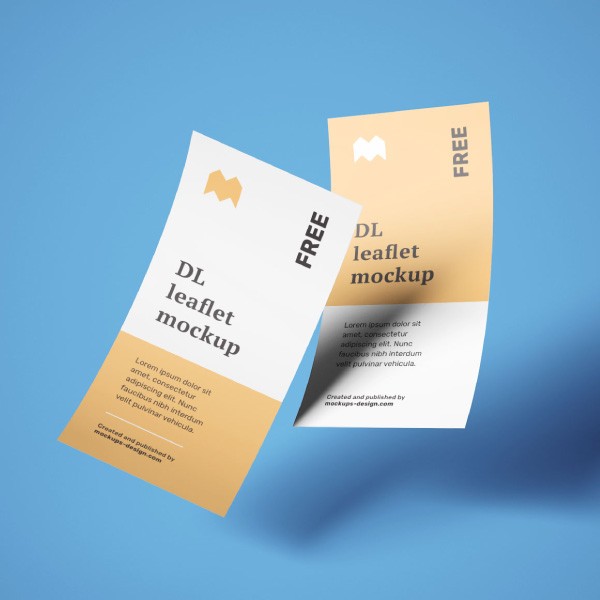
A flyer is a single-page printed sheet designed and distributed to promote an event, product, service, or idea. Its purpose is to quickly inform and persuade people to take action, whether visiting a shop, attending an event, or checking out a new offer.
What are the different types of flyers?
There are promotional flyers, event flyers, informational flyers, invitations, handbills, and voucher flyers. Each flyer type serves a different business goal, like increasing brand awareness or driving sales.
How are flyers different from folded leaflets?
Flyers are typically single-page and straight to the point, whereas a folded leaflet is a folded sheet of high-quality paper with more detailed information. Flyers are distributed casually to large audiences, while folded leaflets are typically sent to targeted audiences or handed out to existing customers.
What is the best size for a flyer?
It depends on your goal, but the most common flyer sizes are 10.2 cm × 15.2 cm, 14 cm x 21.6 cm and 21.6 cm × 27.9 cm. Smaller flyer sizes are great for handouts, whereas larger sizes work well for bulletin boards or mailers.
How can I make my flyer stand out?
Start with a bold headline that speaks directly to your audience’s needs and use high-quality visuals that support your message. Stick to one clear call to action and choose a flyer font that’s both readable and on-brand. Want extra impact? Add a limited-time offer to create urgency.
Contact Waves Branding team today for all your flyers printing needs or any branding services your company needs